9.23.2011

{Escapes} Apple Picking in the Hudson Valley


stone ridge, ny

Today’s the first day of autumn, so there couldn’t be a more perfect day to tell you about this orchard upstate that I’m kind of crazy enchanted with. I admit, I’ve been falling in love with orchards since I was toddling along the fallen Jonagolds at the Edward’s Apple Orchard in Popular Grove, Illinois. But this orchard, I swear, is not like any I’ve ever seen before. It’s not enchanted in that coiffed-Donna-Hay-picnic-between-the-rows-of 200-year-old-trees kind of way. No, this is more of a fell-down-the-rabbit-hole-and-something-is-not-quite-right-but-I-kind-of-like-it way.

It all started with a rustic “Mr. Apple: Organic Apples” sign that Greta and I have been passing on Route 213 most Sundays of our tenure as weekender’s upstate. That’s when we take our Sunday drive to the High Falls Flea, while András is back in our half-finished house working on any number of un-baby-friendly projects. The sign pops up just after the sign for Hopshead Craft Beer Market and just before the sign for the Northern Spy Restaurant, other country intrigues, but with oft a sleeping baby by my side, I’ve never stopped. Until…

For the last two weeks, my mom’s been in town watching Greta while I cook and write, which has given me the inspiration and courage to explore every number of country curiosities on weekends. She’s been the best sport imaginable, smiling away the day in a house with no bath, scarce supplies and a film of fresh sawdust on sills and floors following every weekend project. We’ve really resurrected the old farm girl in her. She’s even adopted a bit of the infectious free-spiritedness in the air up here. And in perfect timing, since you need a little farm girl (mixed with a little Woodstock) in you to enjoy the bare, un-commercial beauty in Mr. Apple’s Orchard.

There, up a long gravel drive, is another sign to pull up and honk. We did. With Greta on my hip and mom at my side, we exchanged hellos with Mr. Apple before we set forth with a nary a rule to collect a bagful of his double-fist-sized Macs.


Thanks to the rains and hurricanes, and the rot of the apples that fall to the ground, and absence of pesticides, there are bugs. And oddities. But what I love about this orchard is this: You are the only apple pickers. And for the half hour or hour that you’re there, these trees, this orchard, is yours. There’s no crowds, no rules, no hay bales. Just land dense with trees, branches packed to their very max capacity with crisp, juice-laden apples. 

You'll find the black blemishes characteristic of wildly grown apples, but with a little scrubbing, beneath them is gleaming red and good flavor. 

With those apples, we’ve had an almost nightly baked apple for our supper sweet. We’ve have had heaps of peeled macs simmering in our sole copper pot for sauce. We’ve made apple-turnip-and-carrot mash for Greta’s lunch and grated apples over our morning oats. Until there were no more.

“I have to admit, I was skeptical about these apples,” mom said, as we finished the last of them. “But they have the most incredible flavor.”  

The next weekend, we convinced András to come picking. For the sake of research and Mom (and András, who likes a tidier Sunday outing) we picked instead at the Stone Ridge Orchard, on the same stretch of Route 213. Here, for the same prices, we found pretty rows of trees dotted with crisp, bright red Romes, sweet-tart Empires and fat Cortlands for cooking. Here there were families, babes in backpacks, Boy Scouts, pies for sale and rules for picking. Here, if you wanted, you could have a hayride, or a hike along their long path that spans the rounded landscape lined with youthful, healthy trees.


And back at home, without a doubt, the lush apples in our bag of loot are going just as fast.

Just a stone’s throw from the NY State Thruway (87) are two very fine orchards, both worth a trip from the city. Here’s how to find them, and more details on what you’ll find there:

Stone Ridge Orchard
3012 Route 213
Stone Ridge, NY

Though not organic, the Stone Ridge orchard uses Integrated Pest Management, which means they spray non-chemical solutions to control bugs. Look for a lad called Shane, who can tell you just about anything you need to know about those apples---which ones are ready and what they taste like, the history of the orchard and why we should all go and pick in the name of saving that lovely land. As it turns out, some developers have outright offered to buy the land to develop it into a strip mall. Exactly the kind of thing that has no place on a country road. Elizabeth Ryan, who owns Breezy Hill Orchard and leases the Stone Ridge Orchard, is bound and determined to save that land. And I’ll put at least half dozen bushels on her if that will help. For more information, check out the Friends of the Stone Ridge Orchard website or Facebook page to help save the orchard.

Now picking: McIntosh, Rome, Empire, Cortland

Mr. Apples Orchard
25 Orchard Street
High Falls, N.Y
(845) 687-0005
(845) 687-9498

What he calls Organic Style apples, or low-spray, meaning he sprays in the spring only, before the bud of the fruit arrives. His website boasts: Chat with Philip Apple while you taste the magical airDon't mind the bugs in Mr. Apple’s magical air, whose presence means reduced exposure to pesticides for you.  His trees and his apples, fancy or not, are just right. Wash the apples well with organic fruit spray before peeling or eating. 

Now picking: McIntosh, Golden Delicious

9.21.2011

Newlyweds Cook: Nicole + Justin

Making friends as a grown-up can be difficult, but when these two lovebirds moved overseas, they found the best way to get acquainted with the locals was with a warm invitation to break bread at their table. Now they are king and queen of the dinner party, and when you try Nicole's signature dish below, you'll understand why they hold that title.  

{photo by Clary Pfeiffer}

Nicole + Justin
London, England

Travel. Culture. Celebration. Love. These words describe the sort of life we have created for ourselves, and food punctuates each of them.

About two and a half years ago, Justin’s work brought us to London. Though we had a few friends here already, we found that when it came to making more, good food by way of a casual dinner party was the perfect gesture. If there is one thing we have learned throughout our travels—whether it’s over schnitzel in Berlin’s boystown or a glass of homemade strawberry wine in a Brussels brothel-turned-bar—it’s that great friendships and delicious food can be discovered in the most unsuspecting places.

When we entertain, we prefer to live it up and laugh over rustic homemade organic dishes, and often our menus are inspired by friendships—new and old—that have formed over a shared meal many miles from home. Though a full sit-down dinner is more intimate, most urban dwellers like us can only accommodate a few people, so we convert our favorite entrées to a tapas style menu, which allows us to expand our guest list and the variety of food. The added appeal of tapas is that some dishes can be prepared in advance and others can be brought out well into the night so guests can mingle and nibble with leisure, fully savoring the food.

Our dinner parties are often guided by a theme, usually influenced by the city we’ve most recently visited. For example, consider an Italian tapas menu with a few homemade pizzas, deconstructed caprese salad, and homemade ravioli along with your best replication of the sauce you had at that tiny osteria in Tuscany. Whatever your location or travel destination, real or fantasized, let it shape your next party menu and see where it takes you.

Nicole’s recipe for tuna tartare is below. It was originally made for a light, relaxing lunch but is now an often requested must-have dish, easily prepared beforehand.

~

Tuna Tartare

8 ounces of sushi grade tuna
1 avocado
2 scallions, sliced
2 tablespoons toasted sesame seeds
1 teaspoon wasabi paste
2 tablespoons low sodium soy sauce
1 tablespoon rice vinegar
Juice of ½ lime

Deep fried wontons or crackers to serve

Chop tuna and avocado into bite size pieces. Add scallions. While sesame seeds are toasting, combine the wasabi paste, soy sauce and rice vinegar in a bowl until the wasabi is incorporated. Add the lime juice. Pour dressing over the tuna and avocado until coated. Add toasted sesame seeds. Serve with deep fried wonton wraps or crackers. Leave refrigerated until ready to serve.

Active prep time: 10 minutes


Tell us, newlyweds, when it's time to feed a crowd, what's your go-to dish?


9.15.2011

Flirting With Fall, But Still Holding Tight to Tomatoes { aka. how to ripen green tomatoes}


With any luck, we'll be eating tomatoes until Thanksgiving. It happens just about every year. We get our plants in late, and survive August on the generosity of our neighboring green-thumbs and the hand-picked treasures of our local farmers. But come September, October and even those first weeks of November, we're in business.

Depending on what climate you live in, September can be peak tomato season. And it's also just cool enough to turn back on your oven or stove. And you know what that means. Yep, BLTS.

It's also the time of the year when the garden gets kind of murky. Plants start to shrivel and suffer from lack of sun,  even with their plump green 'maters still attached. I love nothing more than a sun-ripened tomato that stays on its vine until you pluck it still warm into your hot little hand. But this year's been rough on the garden. Ever since Irene, it's been all about green tomatoes or no tomatoes at all. I let my pale orange-yellow ones ripen to a rosy blush on my windowsill, but if you've got a bunch of greenies, here's a little trick I learned from our neighbor, who at this very moment has 122 of his home-grown  tomatoes ripening on his kitchen table.

1. If your vine is going or the weather threatens of frost, pick tomatoes from them when they are pale green and yellowing, and set aside any rock hard green ones for cooking.  
2. Wrap each tomato in tissue or newspaper and lay them stem side down, where they are their toughest. Keep them in a cool, dark place until they begin to blush. Unwrap and let them finish ripening on the kitchen counter until deep red. 
You won't get quite the same texture as those ripened on the vine in the sun, but they'll beat a grocer's tomato on taste every time. Long live the late-season BLT.

9.14.2011

Newlyweds Cook: Kamilah + Julius

Call me old fashioned, but I believe all that business about food being the way to a man's heart (though in truth, it's the way to a lot of ladies hearts too). I'm a bit of a sucker for anyone who embraces the innocent hope that their cooking can cast a spell on their beloved. So I have to hand it to my friend Kamilah Duggins for putting her charms to work to nab her hubs, Julius.

Kamilah and I were pals way back in Journalism school at the University of Missouri. We talked more about getting the story than getting the guy back then, but when she turned up ten years later (just a subway ride away in Brooklyn, no less), I was thrilled to learn that we share a crazy love for food and our guys. I'm thrilled to introduce you to our Newlyweds Cook editor, Kamilah and her husband Julius, our debut Newlyweds. Here is their story:


Kamilah + Julius
Brooklyn, NY


So many details escape me about that winter evening six years ago when I first had Julius over for dinner. Memory of the weather, what I wore or what music was on the old-school boom box in my kitchen—all the stuff lovers swear they'll never forget—has quietly faded into the background and made way for other, newer moments. But I do remember something of an electric feeling as I buzzed around that day in preparation. It was our first date at my apartment. We had seen each other six, maybe seven times, and I may have already called my friend Amanda to tell her I had met the man I would marry.

I breezed through the market and tidied up the shabby, not-so-chic Brooklyn apartment I shared with three guys who were probably away playing a gig that night. As I stirred the pot, I caught myself daydreaming about how he might react when the first bite of this meal passed his lips. Would he put the fork down and close his eyes to silently savor the magic? Or break into a smile that said what a lucky guy he was? It sounds ridiculous, I know. But what can I say? When it comes to cooking, and almost nothing else, I’m a little bit of a show-off (this also applies to game night; if Taboo or Catchphrase is involved, you want me on your team).

In an effort to impress, but not overwhelm, I chose West Indian style curry shrimp as my entree. It was simple, but the flavors were complex; humble, but still special; familiar, but in the cold of winter, transporting; and most importantly, the star ingredient was Julius’s favorite. Unless he just happened to hate curry, this, I knew, would be a slam dunk.

When he arrived, the air was redolent of cumin, coriander, ginger and cinnamon, a comforting backdrop for the headiness of our energy together. When it was time to eat, I made our plates, sat down, watched as he took a bite, and waited for it: The widening of his eyes, the exclamation to form in his mouth, something that would tell me he was utterly blown away. That this meal was like manna from heaven.

But that’s not what happened. Not so much as groan of satisfaction left his mouth. Instead, he returned to his pre-dinner conversation, and that was that. Evening slipped into night and he hadn’t even said if he liked it.

Ladies and gentleman, my bubble had been burst.

When I ask Julius what he remembers about that date, he says he sensed my mood was somewhat deflated after dinner that night, but he wasn't sure why. When I brought it up months later, his defense was that he cleaned his plate and asked for seconds. What more did I need? I don’t know. In my family when it comes to food, if you like it, you say so. And if it’s really good, you go on about it.

I guess that’s the fun and maddening thing about marriage: while we are joining hands and committing to build a future together, we are silently bringing all of our ‘ways’ with us. My family talks, but Julius comes from a clan of doers.

As it turns out, he loved that meal. Between that and the chocolate chip peanut butter cookies I donated to his super bowl party (I’ll have to give you that recipe sometime), he had all his friends convinced that I was a five-star chef. And ever since, he has been my favorite person to cook for. He likes the mistakes, he washes the dishes, and when we sit down to dinner together just about every night, he is so grateful, so appreciative. In fact, I can’t remember the last time he ate from our kitchen and didn’t tell me how good it was.

Now it’s your turn. We're dying to hear about the first meal you cooked for your love. Won't you tell us?

In the meantime, eat well.

Kamilah


9.13.2011

Newlyweds Cook {food for forever newlyweds}


As some of you already know, my first cookbook, The Newlywed Cookbook: Fresh Ideas and Modern Recipes for Cooking with and For Each Other, is coming out in just a few short months. I can’t wait to finally share the recipes and foods that sustain the sweet (and sometimes salty) life I share with my hubby, András.

There’s the temptation to hear the word Newlywed and write off the topic as something only for real newbies. Honeymooners. But here’s the thing: Somewhere between getting married and writing a book proposal and signing a contract and writing said book, András and I celebrated our one-year anniversary. And then our two-year anniversary. And next month, just before the book hits the shelves, we’ll celebrate anniversary number three.

What is a newlywed, exactly? By definition, it’s someone recently married. The way I see it, in the big picture of a marriage that I very much hope tops five or six decades, we’ll be recently married for many years to come. But more importantly, we still feel like newlyweds, and in many ways (despite the recent addition of our baby bird, Greta), we still live like newlyweds too.

One of my life goals is to always live with András like newlyweds, to cook and eat together with the same reckless joy and passion of that first year together. In that spirit, I want to hear from other newlyweds and forever newlyweds about their lives together, to learn about what makes their relationship tick, how they share meals and messes in the kitchen, what they cook, and where they eat out when they’re not cooking, all of which has inspired the launch of my new column, Newlyweds Cook: Food for Forever Newlyweds. This is a column for newlyweds, oldyweds, almost weds and never weds who love cooking, eating and celebrating life together.

To honor our title, I’ve invited a newer newlywed to join me as our Newlywed Editor as we begin our pursuit to tell the stories and share the recipes (mine, hers and sometimes theirs) that keep us all well fed. I’m going to introduce you to her and her hunky hubby tomorrow, so please come back and meet them. In the meantime, get into your kitchen and flirt with your sous chef.  We’ll be looking for twosomes all over the globe to join our column month-by-month and share the things that make your kitchen the spirited center of your nest.


xx, 
Sarah


P.S. Follow us on twitter @NewlywedsCook

9.10.2011

The Sweet Spot: Whole Wheat Semolina Peach Pancakes


hurley, ny

To say that I'm indecisive would be a grand understatement. For example, I can't decide which I love more, peach season or apple season. I can't decide if this post should be about the end of summer, or the beginning of fall, or whether I'll be baking peach upside down cake or tart tatin for tonight's dessert. 

Luckily, for a few more weeks, maybe even just two, I don't have to. We're in the sweet spot, those days when one season turns into another. The days when the last and most flavorful peaches show up at the market elbow to elbow with the first apples of the season. For a few more splendid days, us non deciders can have both. 

It is these days that are made for cooking. Peach pancakes for breakfast. Apple sauce simmering on the stove to savor warm from your favorite bowl as the nights turn cool.   

Since we have lots of time yet to talk about apples, let's end peach season with a strong finish. Here, for your Sunday brunch, the very pancakes that gave our weekend a perfectly peachy start. 

~
Whole Wheat-Semolina Peach Pancakes


1 2/3 cups white whole-wheat flour
2/3 cup semolina flour or finely ground cornmeal
2 tablespoons raw, organic sugar
1 1/4 teaspoons baking powder
1/4 teaspoon baking soda
1/4 teaspoon fine salt
1 cup organic milk
4 tablespoons (1/2 stick) unsalted butter, melted
2 large organic eggs

2 to 3 ripe local peaches, peeled and thinly sliced
pure maple syrup, for serving


serves: four

  1. To make the pancakes, whisk together whole-wheat flour, semolina flour, sugar, baking powder, baking soda and salt in a large bowl. Whisk together the milk, melted butter and eggs in another bowl. Make a well in the center of the dry ingredients, and whisk in the wet ingredients until just incorporated into a thick batter.

  1. Heat a nonstick griddle or heavy skillet over medium heat until a drop of water splashed on the pan sizzles. Brush the griddle lightly with melted butter. Use a 1/3-cup measure or a ladle to scoop pancake batter and drop it onto the hot pan, leaving about an inch or so between pancakes.

  1. When bubbles form around the edges of the pancake, lay a few slices of peach into the batter on each pancake, leaving plenty of space between the fruit. Use a flexible spatula to gently lift and flip the pancake. Continue cooking on the other side until the pancakes are golden brown around the edges, about 2 minutes. Repeat, adding more butter to the pan as needed. Butter and serve warm with extra peaches and a drizzle of maple syrup. 

8.25.2011

August Is...


...tomatoes eaten out of hand over the sink with a salt shaker. rhubarb upside down cake. two am rendezvous with the last slice of watermelon. corn on the cob. rain storms. poolside naps. baskin robins peanut butter and chocolate ice cream. two chapters in the hammock. michigan peaches. the county fair. fleeting. 

8.24.2011

Best of the Rockford Farmer's Market


rockford, il

I’m not sure if my mom got it from me, or I got it from her, but we both love a good farmer’s market. We’re fortunate to have one on Wednesdays just up the street from our family home in Rockford, Illinois, so during my week home resting and cooking in my virtual test kitchen (mom’s kitchen), my sister Jenny and I went to check it out. I hadn’t been in years, maybe even ten, and I wasn’t prepared for what we found there—an absolute jewel of a market filled with astoundingly delicious locally-grown produce at incredibly fair prices. There’s also world-class cheeses, alluring bunches of fresh flowers and the best pizza I’ve had all summer (which is saying something, since I live in New York). 

While I can’t claim to have tried it all, here are three standouts that should not be missed:  


Van Laar’s Fruit Farm Stand
Capron, IL

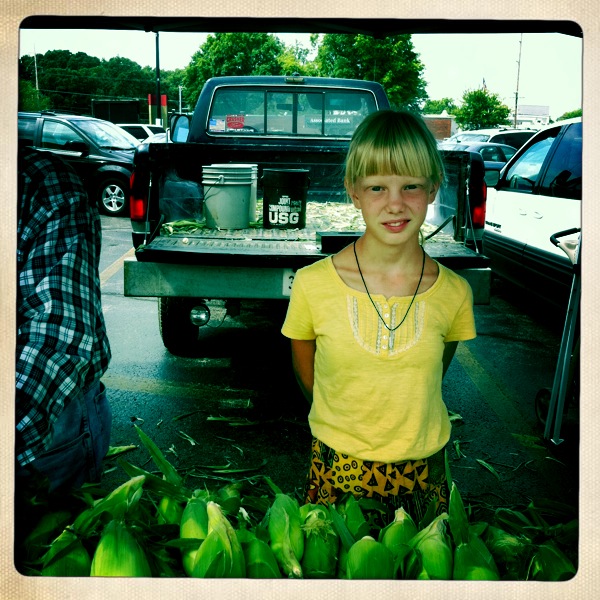
It was the sweet face of Rachel Van Laars, the fourth of the five Van Laar’s children, that got my attention as much as the sweet corn she was selling. Her conversation kept me there, the confident manner in which she conducted business and answered my questions about life on the farm with her brothers and sisters. Admittedly, I wanted to crawl inside their family truck and head home, if just for a day, to what seems a more innocent world, the precious and fleeting institution of the family farm. Instead, I took home an armful of their sweet corn and heaps of heirloom tomatoes, which delivered on their promise of simpler times. Besides their inviting selection of fruits and vegetables, don't miss their locally grown and milled whole-wheat four and wheat berries.    

Beloit, WI

Here you’ll find an all-around great selection of fresh and aged cheese, mostly regional (yah for artisan Wisconsin cheese!) with the occasional import (like the buttery sheep's milk Lamb Chopper from Cypress Grove). Do not miss the Raspberry Bellavitano from Wisconsin, a subtly sweet and sharp cheese aged in New Glarus Raspberry Ale, named the Best New Cheese and Cheese of the Year at the 2008 World Cheese Awards in Ireland. The Cheese People keep their cheeses wrapped in plastic due to local health codes, but since cheese is a living, breathing food, be sure to rewrap it in wax or cheese paper before you store it in your fridge. Or better yet, put it out right away to enjoy.


Rockford, IL

This pizza is every bit as good as it looks. Let the line that forms in front of the mobile brick-oven operation speak for itself. Eight dollars will buy you a very, very good lunch.

There are a dozen or more farmers worth getting acquainted with at this market alone (like the folks selling the brilliant bouquets of zinnias, and the lady at the south end who sold me plump organic eggplant and crisp purple peppers). I’ll be returning once more on my way to O’Hare as I head back east, and again and again whenever I’m in town. 

In case you miss today’s Edgebrook market, here’s a list of all the farmer’s markets, locations, dates and times in Rockford.

Rockford
COLONIAL VILLAGE FARMERS' MARKET
Newburg Road & Alpine Road
Late May through October, Fridays from 9am to 1pm.
815-398-3350

Rockford
EDGEBROOK FARMERS' MARKET
Edgebrook Shopping Center
Wednesdays. First week in June - last week in October: 9 am to 1 pm.
815-226-0212

Rockford
MIDTOWN FARMERS' MARKET
222 Seventh Street
Fridays, 3pm to 8pm. The best produce from our local farmers including seasonal vegetables, fruits, herbs, plants, flowers and more.
815-961-1269

Rockford
NORTH END COMMONS FARMERS' MARKET
1400 North Main Street, West lot
Saturdays, May through October, from 8am to noon.
815-962-1234

Rockford
RIVER DISTRICT FARMERS MARKET
YMCA South Lot, 215 Y Blvd
Tuesdays and Saturdays, 8am to noon. Take time out of your busy day to do some healthy eating shopping which features low prices and locally grown organic produce.
815-964-6221

Rockford
PERRYVILLE FARMERS MARKET
Perryville Commons, South Perryville Road and Fincham Drive
Saturdays through October from 9am to 1pm.
815-229-3000

7.28.2011

An Epic Watermelon Day


Remember watermelon seed spitting contests? I know, it's hard to. Because if you're part of my generation, watermelons have been seedless for nearly half our lives.

But I do have dozens of memories of sitting hip to hip with my grubby-kneed sibs on the edge of the back deck hunched over slices of melon so big our faces were lost in them. I remember coming up for air and spitting seeds as the juices dripped down our wrists toward our elbows. I especially remember watching my dad stand over the sink and skillfully flick away the black seeds into the sink as he turned the melon flesh in his hands, yielding precious, giant chunks of seedless flesh for his lush saturday fruit salads. But these seem like almost ancient memories.

I can hardly think of a food I love more than watermelon, and to this day I could easily eat half a watermelon myself  (mostly because without the seeds, there is nothing to slow me down). Which is why, when I got a load of the whole watermelon sitting on a stool in the back pantry at Andras parents house yesterday, I nearly clapped with glee. It wasn't just the sheer size of it – easily 17 inches long, surely more than 8 kilos –it was its shape, fat and grooved, deep, dark green like a watermelon I remember from childhood.


"Now that is a watermelon!" I almost shouted, and ran to get my camera.

Andras nor his parents couldn't understand why I would want a photo of a watermelon sitting on a dingy stool. By now they are used to  me taking photos of well, almost everthing we eat, but a watermelon?

"A watermelon like this is nearly extinct in America," I said, with no facts to back up my hypothesis. 

"Really?" Andras questioned the source of my statement, but I had only this: I couldn't count the number of watermelon we'd eaten together in the last 4 years on 10 hands. Not one of them was anything but pale green and smooth, with one-dimensional rinds. Not one had a single seed, not even those wussy white ones that used to be there when seedless watermelon were new on the scene.

Sure enough, when we split this one open, it was brilliant pink, dotted with a maze of shiny black seeds, the kind that made the heart so precious, and the firm, seedless pale pink portion nearer the rind like the tender claw meat of the lobster, worth the work. 

"Where did you get this?" I asked. I was imagining a magical field somewhere, gilded in golden light, with enormous watermelon resting on the soil amongst endless chubby vines.

It turned out this watermelon came from the watermelon truck.

I'd heard about this watermelon truck once while eating melon with Andras back home. It was the Mr. Softee truck of his childhood summers, a regular neighborhood fixture on hot summer afternoons. There were no details attached to his stories, only that this truck piled to the heavens with dinnye (watermelon) would circle the neighborhood bringing the very best melons to your front door. Ah, the romance of a childhood in Europe.

The next morning, just before leaving for a long drive to Romania, Papa came running in the house to get me in a flurry of words.


Gyere. He said. Come. The Dinnye truck had arrived. I came running with cameras. 


I don’t know what I had pictured (a wooden gypsy cart pulled by a team of horses, perhaps?), but it wasn’t a 1988 Citreon hatchback with a loud speaker on the top.  But once I saw these seasoned watermelon traders in action, my disappointment dissipated. I watched from the sidelines, noting every detail. The way he picked the watermelon, held its weight, checked for the pale creamy spot on its underbelly. Then, like at a fine Pince (Vineyard), the merchant inserted a sharp, rounded knife and extracted a perfect cylander of plump pink melon, seeds, rind and all, for a taste. He held the knife out directly toward me. 

"Madame," he said. 

My teeth cut through the crisp, dripping flesh. Perfect. 


I can think of no finer culinary companion for an 8-hour family road trip than a Hungarian watermelon. We loaded it in the car, and hit the road east toward Romania, likely the very direction from which the watermelon came...

Back home, there's no dinnye truck on which to rely on for access to fine, fat watermelon. So in the sticky heat of the coming August days, take faith in your own watermelon-picking expertise.


~
How to Pick a Watermelon


1.     Look for a firm, symmetrical watermelon without cuts, bruises or dents.
2.     Look for a watermelon that is heavy for its size, full of delicious juices.
3.     Look for a creamy, pale yellow spot on one side that indicates the melon ripened in a field in the sun.


7.26.2011

Wild Hungarian Plums & The Szilva Lekvar They Never Became


Veszprem, Hungary


Every year, we plan our trip to Hungary based on the seasons. We come in June for eper (strawberries). July for málna (raspberries) and meggy (sour cherries). October for körte (pears) and füge (figs). That we are here for plum season is a happy accident. And there is one plum in particular that has caught my attention — tiny purple plums that clustered on thin, tangeled branches like bunches of grapes.


Of all the stone fruits I adore, plums are my least favorite, thanks in part to growing up in a country where the fruits in most grocery stores have been whittled down to those that ship and sell well. Plums have been so unremarkable in my fruit-loving life that I can recall exactly three memorable plums: The first was one I picked directly from a tree, probably without asking, around the age of six. The tree in question belonged to our neighbors, the Weltes, and though I can't be sure the variety, the simple thought of having fruits grow on trees in your own backyard was transformative. The second, elegant sweet yellow mirabelles that I ate by the handful in St. Tropez two summers running, which are already gone from the trees here in Hungary. The third, the ruby-red fleshed Elephant Heart Plum, first grown in Sonoma County, California, a plum so spectacular that it is protected by the Slow Food Ark of Taste, lest it peril in extinction. 


There are over 2000 varieties of plums in the world, and, so I've read, at least 100 varieties grown in the United States alone. I've seen a handful of noteworthy ones in the biggest farmer's markets in New York and California, but these—these lila (purple) beauties I’ve never seen before. 

I run inside to consult Papa, and dig for his book entitled Fák (trees), the agrarian picture book that doubles as my guidebook to his backyard. I turned to the pages marked szilva. Plums. But when I explain, through András, what I’m looking for, I get a collective shake of heads from all parties.

“You won’t find that plum in a book.” András explains. “It’s a local plum. Wild.”

“So, what is it called?” I ask.

Kökeny Szilva

András smiles. Blueberry Plum, he translates.

It's a good description. Their color is deep purple-blue, with the same white bloom of a blueberry on its bush. 

I gather from the size of them, no bigger than the top digit of my thumb, there are only two things to do with them. Eat them by the handful ripe from the tree, or, turn them into preserves. 

Igen. Lekvar. Mamma says. 

Papa gestures his arms like an airplane. Aha, it is those that  same silva lekvar that didn’t make it back home with me on my most recent trip here in October, almost two years ago, due to the firm no liquids policy of the FAA (thought I maintain that lekvar is not a liquid). 

I feel a jam-making session coming on, and consider racing back to the yard to collect them all. Surely she doesn’t pit them first. I imagine she must cook them down, then pass them through the food mill, leaving all the pits behind. I explain, with gestures.

No. She shakes her head and charades herself pitting the tiny plum one by one in her chair in front of the TV. Bless her, she is a better woman than I. 

Suddenly, I’m quite tired, and the idea of pitting a few kilos of pici (tiny) plums seems like the work for another day. Besides, she has already put up several jars, plenty for spreading between our palicinta (pancakes) and over fresh kenyar (bread), and two extras she tucked aside for us to bring home (this time in our checked luggage). 

Of course, I recorded her method for another day, a time when it's my responsibility to keep the family in lekvar. I hope that day is a long ways away. 

If you come across a batch of special plums, here's Mamma's Recipe. This calls for sugar, required for the tart wild plums, but not for any sweet plum variety, which can be cooked down in its own juices until thick and sweet {I recommend the alluring fruit-lovers guide to all things preserves, The Blue Chair Jam Cookbook}. 


~
Szilva Lekvar


1 kilogram / 2 1/4 pounds tart plums, pitted
600 grams / 3 cups sugar 


makes 5 pint-size jars preserves

  1. Combine plums and sugar in a large heavy-bottomed pot over low heat. Cook until completely broken down, stirring occasionally, about 2 hours. Puree with an immersion blender to desired consistency.
  2. Can according the Ball canning guidelines (here), or pack in pint containers and refrigerate for up to 2 months. 


7.24.2011

Hungarian as Apple Pie


We arrived in Hungary just in time for lunch, as we always do, and were met with the same meal that I’ve come to count on as the taste of Hungary.  Everything was just as I remembered it except now I am Anya (mommy) and Anya is Nagymamma or Mamma (grandma). This time the table was set with a tiny spoon for Greta, and before we eat, she is showered with the hugs and kisses of her Mamma and Papa (Grandma and Grandpa), aunts and an uncle who had waited 8 1/2 long months to meet her. 

The rest of our first day here was as it always is. Only, after lunch I took my nap side by side with Greta instead of András. And when we awake, groggy and hungry yet again, there, of course, is Nagymamma’s almás pite. Apple pie. The perfect soothing anecdote for seven sleepless hours on a plane.

My guess is there’s as many ways to make an apple pie in Hungary as there are in the U.S. But there’s only one way I like it back home—all butter crust, big chunks of tart apples coated in cinnamon, and topped with a thick slab of sharp cheddar— and only one way I like it here in Hungary. That is Nagymamma’s way.

Her apple pie is a different thing all together from any pie I’ve ever known. It is thick layers of tangy, tart apples cooked musty sweet like apple butter between two thin layers of soft whole wheat dough, with the characteristic graham flavor I’ve come to equate with the taste of András' home. Like most sweets in this household it feels wholesome, almost healthy, fruit picked from backyard trees enrobed in a graham crust. It’s the kind of thing you might enjoy with cheese (say Trappista, from the Trappist monks of Hungary’s hills) as a light dinner (since the large meal here is consumed at noon), or with coffee and milk for reggeli (breakfast) the next day.

Luckily, Nagymamma has the foresight to make a batch big enough for both.

Early on our second day, we run out of what at first seemed an endless plate of almás pite. And we are restless. It’s cold here, for the family, a respite from the 104 degrees of mid-July; For us, a surprise. We’ve packed for high heat, and our gauzy summer dresses are off-limits in the house of a grandmother who is always after us to bundle up, wear slippers on the bare floor, cover our necks lest we get the hiccups. There’s not the right light for making pictures of all the fruit trees brimming with each imaginable variety of stone fruit. Even laundry is on hold, since my mother-in-law, like most Hungarians, still relies on the sun as her dryer. So, there’s nothing to do but bundle Greta in the wool pants and cap her Nagymamma knit for her, and bake.

I hint that I’d like to learn to make Mamma’s almás pite. Out comes her book of hand-written recipes. I examine it, trying to imagine how decagrams translates to something usable in my kitchen vocabulary.


Around me, people pass Greta from lap to lap.  Old friends and cousins come and go, talking in what seems (in my limited Mgyar vocabulary) to be great length about the simplest topics, each family member weighing in with words that seem too long to mean what they do.


When the conversation looses me, Greta and I steel away to the garden and make ourselves at home in the blackberry bramble, 5-years thick. The berries are merlot black, jammy. And if perfectly ripe, they ooze a juice that gives us away when we return, my fingers stained from picking and a little inky ring around Greta’s tiny mouth, still in a pucker of pleasure.

It is there that I get the idea that we should add blackberries to the almás pite, to make it seasonal. Apples are, afterall, a fall fruit. I tell this to András. He translates.

Papa shakes his head. Apples are in season here. András tells me, translating his parents rebuttal.  Only a few blackberries are ready, he says (though Greta and I have just eaten them). Most of them need a few days.

But okay, Nagymamma agrees. We will add szeder. Blackberry.


While András goes for a long run with his oldest friends, Greta and I go to the garden with Nagymamma to pick fruit. First, she collects the apples that have fallen to the ground. Nothing is wasted here. Then another kilo that come easily from the tree. 


Then blackberries, I remind her.

Igen. Szeder. Yes. Blackberries. 

Inside, I set up the computer to Google translator, put Greta in a pouch on my back and line up my recipe booklet side by side with Nagymamma’s to start recording.

40 decagram flour

2 kilos of alma. Apples.

I taste them. They are sweet, just subtly tart, and they remind me of jonagolds.


What type of alma? I ask, in a blend of Mgyar-English. 

I type the word variety into the translator and she examines the result. Fajta. 

 Nyári Piros. Mamma answers.

She writes the words in my notebook.

I repeat the words with her. Nyári Piros.

Then I type it into the computer to translate. 

Summer Red.

A summer apple. Indeed.

How strange they must think my ideas, my insistence that we add a handful or two of szeder to the perfected almás pite. How ridiculous to think my ideas about seasonlity aren't shared here, here in a culture where almost every family outside of large cities still, in large part, lives off their land. Here, in a home where almost everything I've ever eaten is grown by their hands. I try to apologize.

Bocsánat. Sorry. Most értem. Now I understand.

Nagymamma smiles her constant, unjudging smile.

We finish making the pita, Mamma, Greta and I. We rub the butter into the graham flour to coat it like an American apple pie dough. We add sour cream, egg yolk. We roll it thin, coat it in the warm apple butter stained pink from szeder. We cover the filling with another layer of dough, prick it with a fork and set it to bake.

Fifty mintues later then the pie comes from the oven. We cut it into squares, dust it in powdered sugar. Family members emerge from every corner of the house and the pile on the plate disappears. Five minutes later, András sister and sister-in-law, Dalma and Szophie come back to the kitchen praising me, my silly idea redeemed.

Szeder Almas Pita. Szeretem. I love it.

Jó. Nagyon, nagyon jó. All agree. Good. Very, very good. 


~
Hungarian Blackberry Apple Pie


filling
2 kilos / 4 1/4 pounds tart-sweet apples, such as Jonagold
1 handful ripe blackberries
250 grams / 1 1/2 cups sugar
1/2 teaspoon cinnamon
1 lemon

crust
400 grams / 2 2/3 cups graham or whole wheat flour
100 grams / 1/2 cup sugar
1/2 teaspoon baking powder
pinch sea salt
250 grams / 9 ounces / 2 1/4  sticks butter, in pieces
1 cup sour cream
2 egg yolks


serves: a crowd (about 25 bars)

  1. Peel, core and slice the apples. Add them to a pot with blackberries, sugar, cinnamon and the zest of 1 lemon. Squeeze the juices of half the lemon over the top, straining the seeds as you go. Cook on low heat until the apples break down.
  2. Preheat the Oven to 175 c/ 250 F. Meanwhile, whisk together graham flour, sugar, baking powder and salt. Work the butter into the flour with your hands (or pulse together in a food processor) until the butter coats the dry mixture and resembles a coarse meal. Stir together sour cream and egg yolks and blend into the dough with a fork until it just comes together.
  3. Use your hands to gather the dough and knead it slightly in the bowl. Divide the dough into two portions, one slightly larger than the other.
  4. Roll out the first portion of dough on a lightly floured surface to create a rectangle just large enough to cover the bottom and up the sides of a 12 X 17 X 1 inch / 32 X 44 X 2.5 cm jelly roll pan or your closest size similar pan (a 1-inch sided baking sheet works well). Spread the filling over the dough. Roll the remaining dough until large enough to cover the top. Don’t worry if some pieces of fruit are left uncovered or the dough cracks in places.
  5. Prick the dough all over with a fork and bake until cooked through, about 50 minutes. Cool 30 minutes. Cut into bars; dust with powdered sugar and serve warm or at room temperature. 


My photo
New York City, United States
Sarah Copeland is a food and lifestyle expert, and the author of Feast: Generous Vegetarian Meals for Any Eater and Every Appetite, and The Newlywed Cookbook. She is the Food Director at Real Simple magazine, and has appeared in numerous national publications including Saveur, Health, Fitness, Shape, Martha Stewart Living and Food & Wine magazines. As a passionate gardener, Sarah's Edible Living philosophy aims to inspire good living through growing, cooking and enjoying delicious, irresistible whole foods. She thrives on homegrown veggies, stinky cheese and chocolate cake. Sarah lives in New York with her husband and their young daughter.